How To Do Pelvic Floor Exercises For Women
Know how to do pelvic floor exercises for women starting out. These pelvic floor exercises are science-based proven to improve pelvic floor strength, endurance and

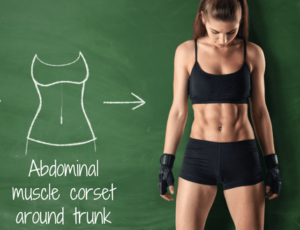
Your trunk is shaped like a cylinder. The walls of your trunk cylinder are formed by the muscles that wrap around your trunk like a corset.
Abdominal bracing is a core exercise that gently activates the deep abdominal core muscles that surround the trunk like a cylinder of support for your spine, pelvic floor and breathing.
This abdominal core exercise video shows you how to correctly activate and then perform deep abdominal core exercises that support your body.
The term ‘core’ is often used to refer only to the ‘abdominal’ muscles. Similarly, ‘core exercises’ is misused, referring to ‘abdominal exercises’.
The abdominal muscles form part of the core musculature.
Your core is your trunk and your core muscles are all the muscles supporting your trunk, including your abdominal muscles.
Your core muscles include your:
The core muscles are designed to work together to stabilise and firm your trunk.
When core muscles work well, together they form a natural girdle of support that firms your spine, pelvic floor, abdomen (belly) and supports breathing. The muscle corset also controls and maintains pressure within your trunk.
Correct abdominal bracing protects and supports your spine, pelvic floor and good breathing patterns.
If the pressure within your trunk is too great, this can overload a weak pelvic floor causing or worsening pelvic floor problems including prolapse or incontinence. If your spine is vulnerable to injury too much pressure within the trunk can cause lower back disc injury.
This is why correct abdominal bracing technique is important for protecting the spine and the pelvic floor.
The abdominal muscles can stop working well with:
Bracing the abdominal muscles incorrectly can cause back and pelvic floor problems.
Abdominal bracing is not the same as intense abdominal hollowing that is sometimes taught in Pilates.
Contracting the abdominal muscles too strongly with abdominal hollowing can cause 2 problems:
Bracing the abdominal muscles correctly can encourage the spinal and pelvic floor muscles to work well too.
This video teaches you how to correctly brace your deep abdominal core muscles
To correctly brace your abdominal muscles:
Note: Correct abdominal bracing is never an outward bulging action of the abdomen. Rather, it’s a subtle in draw of the lower abdomen.
Use the correct abdominal bracing technique to protect your spine and pelvic floor during loading activity.
Typically you would use the technique described above immediately before and during lifting and/or bending forwards. For example safe lifting the washing basket, getting the shopping out of the car, lifting the pram or moving pot plants.
It’s not practical or appropriate to keep these muscles contracted all the time such as when you walk. Use your protective corset muscles (i.e. abdominal and pelvic floor muscles) when you need to protect your spine, then allow them to relax and recover.
Abdominal bracing exercises will help you strengthen your core muscles and improve control for when you do need to use them.
There are a number of exercises you can practice at home to train your core muscles used for abdominal bracing.
These core exercises include:
For more information on these core exercises you can refer to the videos and information below.
» How to Modify Plank Exercise for Safer Core Strengthening
» Core Strengthening Exercises for Beginners
» Daily Pelvic Floor Exercises for Women Download Guide
» Beginners Back Exercises Routine for Safe Back Strengthening
Know how to do pelvic floor exercises for women starting out. These pelvic floor exercises are science-based proven to improve pelvic floor strength, endurance and

Anal fissure treatment for anal fissure healing and relieving anal pain with bowel movements presented by Pelvic Floor Physiotherapist Michelle Kenway. Learn how to heal

Proctalgia Fugax exercises and treatments at home can quickly relieve sudden onset anal pain. Proctalgia Fugax is thought to involve temporary spasm of the pelvic

Tailbone pain relief for sitting and healing coccydynia with Physiotherapist Michelle Kenway. These home treatments can relieve tailbone pain with sitting and promote overall recovery.