Rectal prolapse exercises and using the correct physiotherapy bowel emptying technique can help you manage and potentially reduce the risk of your rectal prolapse worsening.
This Physiotherapy video and information teaches you:
Basics for understanding rectal prolapse
Common signs and symptoms
How to do rectal prolapse exercises (step by step)
Bowel management for rectal prolapse
Prolapse Exercises e-Book
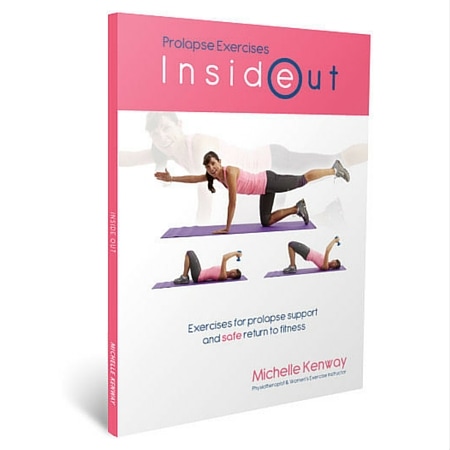
International best selling prolapse exercise guide for women with prolapse and after prolapse surgery.
Rectal prolapse is a condition where the inside of the rectum protrudes out from within the anus.
During the early stages the prolapse may be pushed back inside the body however if your rectal prolapse stays protruding outside the anus you need to seek urgent medical care which usually involves surgery.
If you suspect you have a rectal prolapse see your doctor or pelvic floor physiotherapist for assessment and management advice.
3 Types of Rectal Prolapse
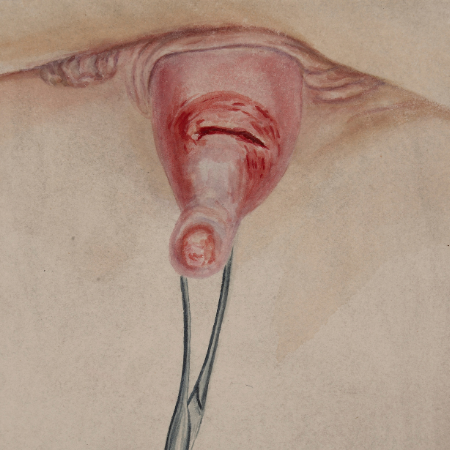
Mucosal prolapse which involves the rectal mucosa (membrane) protruding through the anus (shown right). This is the type of prolapse for which rectal prolapse exercises may be beneficial.
Full thickness rectal prolapse where the rectal wall protrudes or bulges out from the anus.
Internal intussusception where the rectum collapses but stays inside the body and does not protrude. Rectal prolapse exercises will NOT help this condition.
Rectal prolapse is different to a rectocele however the two conditions are often confused with each other. A rectocele is a pelvic prolapse condition in women where the rectum bulges into the back wall of the vagina.
What Causes a Rectal Prolapse?
A rectal prolapse results when the supportive tissues that hold the rectum in position become weakened and stretched so they stop working effectively. These tissues include the pelvic floor muscles that act like a supportive hammock.
The common causes of rectal prolapse include:
Ageing
Chronic constipation and straining to empty the bowel
Chronic diarrhoea
Pregnancy and childbirth
Anal intercourse
Cystic fibrosis
Signs and Symptoms of Rectal Prolapse
Signs and symptoms of a rectal prolapse can include:
A red protrusion or bulge come out of the anus especially after a bowel movement (shown right)
The bulge may become more obvious with squatting and heavy lifting
Mucous and/or bloody discharge from the anus
Stained underwear and difficulty cleaning the anus
Difficulty emptying the bowel completely and possibly feeling a need to strain to empty
General pain or discomfort around the anus which is often worse after activity and/or towards the end of the day.
Initially the rectal prolapse may retract (move back inside) the anus after a bowel movement.
As rectal prolapse worsens the prolapsed tissue usually becomes more obvious with everyday activities such as walking and prolonged standing. The prolapse may not retract inside the anus and this is a medical emergency.
How to do Rectal Prolapse Exercises
Your pelvic floor is a structure made up of pelvic floor muscles and tissues that suspend your rectum and keep it in the correct position. Some of these muscles also help maintain bowel control.
Training involves 3 stages or progression. Working through these 3 stages will help you train effectively to achieve your best possible pelvic floor strength and internal support for your prolapse.
Stage 1 – Starting rectal prolapse exercises
To start your exercises:
Start sitting upright in a firm backed chair or lying down with your knees bent and feet flat on the ground or on your side.
Imagine you are trying to stop wind from passing from your bowel, and urine passing from the urethra (urine tube)
Slowly squeeze inside and lift inwards using the muscles in and around the anus and urethra
You should be able to see your anus pucker (i.e. close slightly) as you contract and look with a mirror
Keep breathing normally and try to keep your buttocks and thighs relaxed during this exercise
Relax your pelvic floor muscles and rest briefly before doing your next exercise.
Stage 2 – Exercising your pelvic floor muscles
Position yourself where you can best feel your pelvic floor muscles working (lying, sitting or standing)
Do each exercise for up to 10 seconds
Relax your pelvic floor muscles in between each exercise and rest briefly to recover
Repeat your pelvic floor exercises up to 10 times in a row
Next practice lifting and squeezing your pelvic floor muscles with a brisk strong technique for up to 10 times
Try to repeat these exercises (long and short muscle holds) 3 times every day
To progress your rectal prolapse exercises:
Increase how long you keep your muscles contracted
Do stronger contractions using the correct technique
Practice your exercises in upright positions (i.e. sitting and standing).
Progressing your exercises is important for making your pelvic floor muscles work harder and ultimately getting the maximum benefit from your training. Your initial focus should be on doing the exercise technique correctly and progressing only when you’re sure you have mastered this.
Stage 3 – Training for everyday
Training for everyday activities involves using your pelvic floor muscles when you need them to work. This includes
In upright positions
Before and during coughing, sneezing and lifting
When you sense an urgency to empty your bowel and also when you need to defer or delay the urge to empty your bladder or bowel.
Tips for Successful Rectal Prolapse Exercises
When starting out choose positions such as lying down for your pelvic floor exercises where your prolapse is more supported
Focus on using the correct pelvic floor exercise (kegel) technique before progressing your training
Perform your pelvic floor exercises (kegels) when your muscles are less likely to be tired (e.g. early in the day)
Contract your pelvic floor muscles after using your bowels
Progress your pelvic floor exercises into upright standing when you are able to do so.
Bowel Management to Avoid Rectal Prolapse Worsening
Bowel management to avoid rectal prolapse worsening involves managing 2 key aspects to reduce the need to strain:
Correcting your stool consistency
Using the correct position and technique for bowel emptying
How to Correct your Stool Consistency
Straining is a key reason for rectal prolapse worsening.
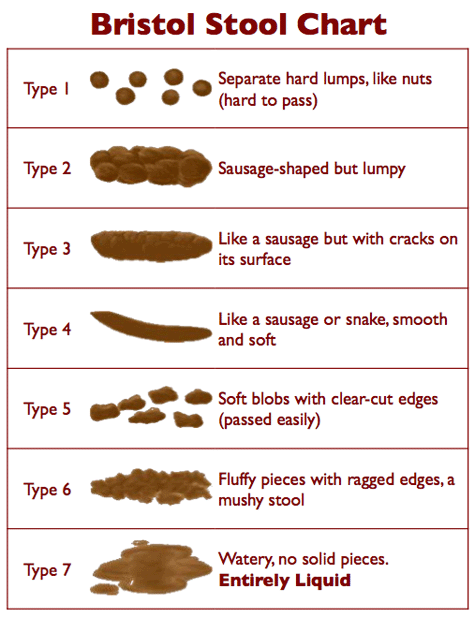
The first step to avoid straining when emptying your bowel is by keeping your stool soft and well formed just like a Type 3-4 on this Bristol Stool Chart (see below). Having a stool consistency that is too loose (i.e. Type 7) or too hard (i.e. Type 1-2) can cause straining with bowel emptying.
Problem 1: Stool too Hard
Yourstool is too hard (e.g. Type 1-2 consistency) which can cause straining and constipation.
Strategies to soften your stool:
Use an osmotic laxative with stool softener like Movicol or Gavilax
Avoid consuming too much fibre if you are already constipated
Problem 2: Stool too Loose
Your stool is too loose (e.g. Type 7) which can can cause you to strain and have bowel leakage bowel leakage.
Strategies to firm your stool and tips for management:
Use medication to firm your stool form the pharmacy e.g. Imodium, Lomotil
Minimize your intake of bowel irritants like spicy foods or caffeine
Barrier cream around anus eg zinc cream (show) protect the skin
Psyllium husks 1-2 teaspoons can help soften and mop up any loose stool and reduce the likelihood of leakage
Use a plain eye makeup removal pad barrier for odour and leakage
Alcohol–free moist wipes or towelettes can assist cleaning and make your last wipe a moist one
Correct Position and Technique for Bowel Emptying
Straining to empty your bowels usually involves pushing or bearing down through the anus, breath holding and pulling your tummy muscles inwards. Pulling in the belly tightens the circular muscle around your anus. Doing this closes the anus making you more likely to need to strain to empty and worsen your rectal prolapse.
Position your body in preparation for emptying by leaning forward keeping the inward curve in your lower back and your spine lengthened, both feet flat on the ground, hips wide apart and supporting your upper body by resting your hands on your thighs (demonstrated in the video above)
To start emptying relax your breathing with 5-6 deep breaths into your belly and allow your belly and pelvic floor muscles to relax
Make waist wide by saying “M” sound and then bulge your belly forwards at the same time by saying “oo” to keep your anal sphincter relaxed during emptying
Try not to push down through your anus, or pull your belly inwards which increases strain on the rectum
Lift and squeeze your pelvic floor muscles when you’ve completed bowel emptying
How to Reduce the Risk of Rectal Prolapse Worsening
Do your rectal prolapse exercises daily and gradually progress your exercises when you can
Practice good bowel habits using the correct technique for bowel emptying and never strain with bowel movements
Choose supported positions wherever possible (for example sitting is more supportive than standing)
Spread out your activities during the day, take time to rest and elevate your legs in the afternoon to reduce pressure on your pelvic floor if you have time
Avoid heavy lifting which increases pressure on your pelvic floor
Manage your body weight and try to avoid unnecessary abdominal weight gain which can increase the load on your pelvic floor.
References
1. Padda BS, Jung SA, Pretorius D, Nager CW, Den-Boer D, Mittal RK. Effects of pelvic floor muscle contraction on anal canal pressure. Am J Physiol Gastrointest Liver Physiol. 2007 Feb;292(2):G565-71. doi: 10.1152/ajpgi.00250.2006. Epub 2006 Oct 5. PMID: 17023551.
2. Image pelvic floor muscles and rectum attribution: Armin Kubelbeck, CC BY 3.0 <https://creativecommons.org/licenses/by/3.0>, via Wikimedia Commonshttps://commons.wikimedia.org/wiki/File:Anatomy_of_human_rectum_and_anus-2.png. Image modified to exclude specific labelling and pelvic floor muscle labelling simplified.
3. Image rectal prolapse Credit: St Bartholomew’s Hospital Archives & Museum, Wellcome Images. Wellcome Images images@wellcome.ac.uk http://wellcomeimages.org Watercolour drawing probably showing a prolapse of the rectum. 6 Jul 1894 By: Mark, Leonard PortalSt Bartholomew’s Hospital Archives & Museum Published: Copyrighted work available under Creative Commons Attribution only licence CC BY 4.0https://commons.wikimedia.org/wiki/File:Prolapse_of_the_rectum_Wellcome_L0061308.jpg
Pelvic floor exercises for women in 3 simple steps for beginners with Pelvic Floor Physiotherapist Michelle Kenway. This Physiotherapist guided video teaches you: Pelvic Floor
Anal fissure treatment for anal fissure healing and relieving anal pain with bowel movements presented by Pelvic Floor Physiotherapist Michelle Kenway. Watch this video and
Proctalgia Fugax exercises and treatments at home can quickly relieve sudden onset anal pain. Proctalgia Fugax is thought to involve temporary spasm of the pelvic
Tailbone pain relief for sitting and healing coccydynia with Physiotherapist Michelle Kenway. Learn 4 cost effective ways to relieve tailbone pain with sitting and promote


 A
A 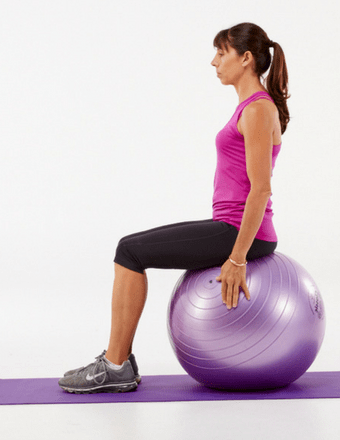 Start sitting upright in a firm backed chair or lying down with your knees bent and feet flat on the ground or on your side.