Prolapsed bladder management involves identifying factors contributing to your prolapse and bladder support exercises to improve prolapse support.
This Pelvic Floor Physiotherapist information helps you understand how to best manage your bladder prolapse, exercise safely and prevent recurrent bladder prolapse after bladder prolapse surgery.
Read on for Physiotherapist tips and techniques for prolapsed bladder management:
1. What is a prolapsed bladder?
2. What are the symptoms of a prolapsed bladder?
3. Does a bladder prolapse cause bladder leakage ?
4. What causes a bladder prolapse?
5. Tips for protecting by your bladder prolapse and after prolapse surgery
6. How to exercise safely with a bladder prolapse, exercises to avoid and those to choose
1. What is a Prolapsed Bladder? 
Bladder prolapse is commonly referred to as “dropped bladder” or “fallen bladder”, and is one type of pelvic organ prolapse. Bladder prolapse is relatively common in women and the risk increases with increasing age.
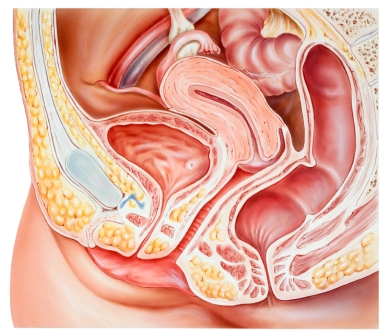
A prolapsed bladder occurs when when the bladder moves into the front wall of the vagina. Sometimes the front wall of the vagina is pushed down and out of the vagina and appears as a bulge at the entrance of the vagina. This occurs when there is a weakness in the pelvic floor support structures allowing the bladder to fall through the area of weakness. Bladder support structures include pelvic floor muscles and thick supporting tissues.
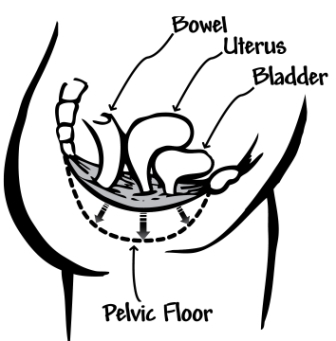
You can see the importance of maintaining a strong pelvic floor muscles with kegels after prolapse surgery from this diagram, especially if you have been diagnosed with a bladder prolapse or after bladder prolapse repair surgery. Pressure from within the abdomen can push the pelvic floor (and bladder prolapse) downwards. Strong supportive pelvic floor muscles help to resist the downward pressure on your pelvic floor from everyday activities and exercise.
2. What are the Symptoms of Bladder Prolapse?
Bladder prolapse may present with a number of different prolapse symptoms. When the prolapse is very mild it may not produce any symptoms. Prolapsed bladder symptoms tend to become more apparent as the prolapse worsens. Some women report one or more of the following symptoms:
- Bulging, heavy sensation in the vagina, often worse at the end of the day
- Lump coming down inside and/or out of the vagina
- Difficulty inserting tampons
- Difficulty emptying the bladder with slow stream and sometimes incomplete bladder emptying.
3. Does Prolapsed Bladder Cause Bladder Leakage?
No, bladder leakage does not occur because of a bladder prolapse. Some women may suffer from a leaking bladder in addition to their prolapse.
Sometimes a bladder prolapse causes a small kink or bend in the urine tube (urethra) which actually decreases leakage during activities stressful activities for the pelvic floor such as coughing or sneezing and this is called occult stress incontinence (because it is usually hidden). This is the reason why women who are found to have stress incontinence and bladder prolapse by their specialist may have a bladder sling or procedure to reduce leakage at the same time as their bladder prolapse surgery. If the prolapse is surgically repaired and the woman also has underlying stress incontinence which she may not have know about then she may start to leak when the prolapse is repaired and the urine tube is straightened out.
4. What Causes Prolapsed Bladder?
There are many different factors that can cause or contribute to a bladder prolapse.
Common causes of a prolapsed bladder include:
- Pregnancy and childbirth (sometimes injury to the pelvic floor doesn’t appear until years later)

- Hormonal changes with menopause
- Ageing
- Constipation and straining repeatedly to empty the bowel.
Other factors which may contribute to bladder prolapse are:
- Being overweight
- Chronic coughing associated with smoking or asthma
- Heavy exercise including intense core training and heavy resistance training
- Previous pelvic surgery including surgery for urinary incontinence, sacrospinous fixation and perhaps hysterectomy.
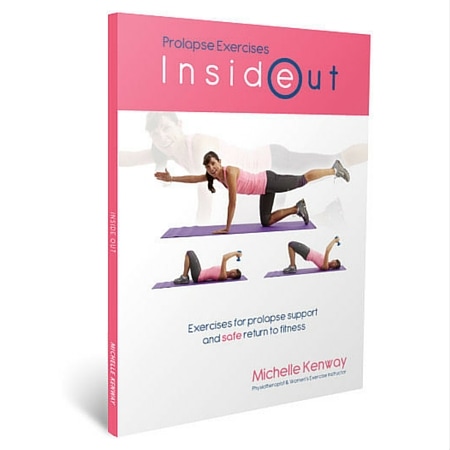
For exercises suitable for women with a bladder prolapse refer to Inside Out – the essential women’s guide to pelvic support by Michelle Kenway and Dr Judith Goh Urogynaecologist.
5. Tips for Bladder Prolapse and After Bladder Prolapse Repair Surgery
Avoid:
- Constipation and repeated straining to use your bowels (see our free training video now on how to overcome bowel movement problems to learn how to empty and avoid straining)
- Heavy lifting, pushing/pulling, bending
- Smoking (to reduce coughing)
- High impact exercise (e.g. jogging, sit-ups, horse-riding, high impact aerobics)
- Heavy resistance exercises and intense core abdominal exercises
- Excessive weight gain
Do:
- Regular pelvic floor exercises or kegels after prolapse surgery - start after bladder prolapse surgery when you have your specialist’s approval to commence. If you are not sure seek further information on how to exercise your pelvic floor muscles (see our free training video on how to find and feel your pelvic floor muscles to the right of your screen, read Inside Out or check with your women’s health physiotherapist).
- Consider a pessary ring - pessary rings are designed to support the prolapse and minimise symptoms by sitting high inside the vagina. Women often find that using a pessary ring helps them to better exercise their pelvic floor muscles by lifting their prolapse and reducing dragging. Speak with your specialist about the feasibility of a pessary for your condition.
- Wear quality support underwear (briefs) or a pelvic when you are active
- Practice good bowel habits – choose bowel friendly foods and never strain to use your bowels. Some women find they can support their dropped bladder by holding a pad of toilet paper over the vagina when using their bowels.
- Alternate activities – avoid prolonged standing especially when recovering from pelvic floor repair surgery.
- Split tasks - do house hold jobs over a few days rather than all in one day.
- Lose weight if you are overweight.
- Rest in the afternoon and elevate your legs if possible.
- Manage chronic cough, chronic hay fever and sneezing by visiting your doctor
- Practice good posture – to promote good pelvic floor function
- Choose low impact exercise and be guided by the expert recommendations in Inside Out - the essential women’s guide to pelvic support if you plan to perform strength training exercises or attend gym, circuit class, Pilates or Yoga classes.
6. Safe Exercise With Prolapsed Bladder?
Many everyday exercises can increase pressure on your pelvic floor and worsen your bladder prolapse symptoms or even contribute to repeat prolapse after already having had prolapse surgery. You need to make sure that you are fully informed about the exercises that are suitable for you if you are living with a prolapse.
1. Fitness exercises that reduce pressure on the pelvic floor
Fitness exercise should be low impact to reduce pressure on the pelvic floor. This means choosing exercises keeping one foot at least on the ground with exercise. This is quite different to high impact exercise such as running or jumping where both feet are off the ground. Low impact exercises include:
- Cycling
- Walking
- Dancing
- Bush walking
- Swimming
2. Strength training and abdominal exercises
Many everyday strength training and abdominal exercises have the potential to increase the downward pressure on the pelvic floor. These are some exercises to avoid with a bladder prolapse:
- Intense abdominal strength exercises and abdominal exercise machines which have the effect of increasing pressure on the pelvic floor
- Specific strength exercises such as leg press and wide leg squats that increase pressure on the pelvic floor and prolapse
- Heavy lifting and straining when lifting weights
- Breath holding when lifting weights-breathe out with the effort of lifting, pushing or pulling
- Plus sit on a ball or a bench for all your strength exercises wherever possible to support your pelvic floor
For further information articles and free videos on safe exercise with a prolapsed bladder and after prolapse surgery include prolapse protection for strength training and 12 abdominal exercises to avoid with prolapse or after prolapse surgery.

We welcome your comments about prolapsed bladder
Please read our disclaimer regarding this information
This information is provided for general information only and should in no way be considered as a substitute for medical advice and information about your particular condition.While every effort has been made to ensure that the information is accurate, the author accepts no responsibility and cannot guarantee the consequences if individuals choose to rely upon these contents as their sole source of information about a condition and its rehabilitation.
Copyright © Pelvic Exercises.com.au

Hi, iam betting mixed up! i have a prolapsed bladder,my physho has told me to stop doing plaites which I do 4 times a week as she says its pulling down when I do the pelvic floor but when i READ ON THE INTERNET it says differnt?I have stopped the classes but ID like your take on this,i also do step,weights,pump,spinning she didnt say anything regarding these,can you advice please. regards chris hamdorff
Hi Christine
Yes I have to agree that many Pilates exercises have the potential to place a large amount of pressure on your prolapse. We have just posted a free video that explains this issue and demonstrates appropriate Pilates exercises for the pelvic floor including women with pelvic organ prolapse and unsafe Pilates exercises.
As far as your other qns go, I think that spinning classes are excellent for fitness and kind to the pelvic floor as long as the gears are not too heavy and you stay seated in the saddle throughout. As far as gym exercise goes I have to say this is a potential minefield for women like yourself with pelvic floor issues. I suggest you read our many articles on prolapse exercise which detail gym exercises to choose and those to avoid, or refer to my book Inside Out which lists in detail the exercises to choose and those to avoid with pelvic floor dysfunction, plus provides you with a safe pelvic floor friendly gym workout. I think the main thing to remember that exercise is fantastic for women, and most women with pelvic floor issues like yourself can exercise safely and effectively – it’s just a matter of knowing what to do and how to do it. Thank you so much for raising this important issue. Good luck Christine, Michelle
i am 34 and have a bladder prolapse my dr has told me that i need surgery i had a baby 7 weeks ago and ready to go back to work but i am not sure if that would be a good idea i work for a warehouse where there is alot of heavy lifting (60 lbs) alot of bending, squating, and pushing should i request some kind of restrictions
Absolutely speak to your workplace health and safety representative to help you devise a return to work plan.
Hi I have a prolapse is it ok to do aqua fit
Hello I live in California I followed your advise and asked my Dr if i should return to work with restrictions and he said yes they consiste of not lifting more than 10 to 15 lbs my employeer was unable to acomadate me so I was put on a LOA, I am afraid to lose my job since I have no more FMLA hours, this protecte my job position, the company that I work for can guarante that i will have my work position back. So I was wondering if I should tell my Dr. if its ok to returne to work with no restictions (60lbs) for the first five hours of my shift then the other three have 15lbs restrictions. I lost my house already I dont want to lose my job I have five children to support and I realy dont know much of laws here in CA. Can any one guid me if this is something I should do?
HiI am 48 years Old and I have been menopausal for about a year or so.
I started suffering from a feeling like something was going to fall out or a small ball sitting in the opening of my
my vagina. I found out after seeing my gynaecologist that it is because my body is not producing enough estrogen anymore to keep my bladder up. He prescribed estrogen as tablet (Vagifem pessary) form to be insert in the vagina twice a week. But, the problem is I am still suffering from this pressure of my bladder sitting inside the opening of my vagina on the days I am not using the vagifem. He said that pelvic floor exercises don’t really help and I agreed because I feel that the pelvic exercises that I do, don’t seem to do anything. The gynaecologist did say the womb was still up in it’s place.
I was wondering if you can help suggest something for me as I really don’t like this feeling of a small ball sitting on the inside of my vagina opening.
Thank you.
Regards,
Lyn
Hi Lyn
Thanks for your comment. I think it is important for you to understand how oestrogen has an effect upon the pelvic floor. As you know with menopause your oestrogen levels decline. Oestrogen has a role in making your pelvic floor tissues and muscles strong and thick. When it declines, the pelvic floor (including the muscles) tends to become thin, floppy and weak and this one reason why women experience prolapse with menopause and beyond. What we do know is that effective pelvic floor exercises help to lift the pelvic floor muscle hammock higher in the pelvis in addition to thickening up the pelvic floor muscles creating more support. This is why in Australia there is an increasing trend for women to receive training in pelvic floor exercises or kegel exercises even before they undergo surgery (to help hold everything up afterwards). Unfortunately many women don’t understand how to do their pelvic floor or kegel exercises properly and just give up on them. My suggestion is that if possible; see a pelvic floor physiotherapist to help with your exercises. Your gynaecologist may mean that the size of your prolapse is too large for pelvic floor exercises to make a difference to your symptoms. When the prolapse is mild-moderate, pelvic floor exercises can often reduce and alleviate symptoms such as yours, however if the prolapse is large, surgery may be required and that is your specialist’s decision. Another option that is often trialled is to use a pessary ring. These can be very useful in supporting a prolapse and alleviating symptoms. Some women find that support underwear is also beneficial in improving their pelvic support. I hope this gives you some information to assist with your future management. Best of luck Michelle
What is your advice on using a mini trampoline for excercise? I realise that rebounding on it could cause pelvic floor strain but would walking on it be ok? I have ordered you book Inside Out but am keen to allieviate my prolapse and get some cardio workout too.
Re: Mini trampoline and prolapse
Hi Frankie
This is a good question. I really think it will depend how you use the minitramp as to the effect it may have on a vaginal prolapse. If you are running on the minitrampoline with your knees lifted high and have both feet off the surf ace at once you will increase the impact on your pelvic floor. If you use it keeping one foot in contact with the surface at all times you will make this a lower impact exercise which is more pelvic floor friendly. The safety for your prolapse will also depend upon how strong your pelvic floor is to withstand the pressure of the exercise, as with all exercises. To be honest I really like cycling for a great low impact fitness exercise that is going to reduce pressure on a bladder prolapse and have great fitness outcomes.
Thanks for your question Frankie
Michelle
I have been doing pelvic floor exercises for about 3 months since I discovered my prolapsed bladder which was precipitated by my stopping Premarin because of breast cancer. (Whew, long sentence)
My biggest problem is tons of gas which I never had when I was able to exercise my abs. GasX is not doing a thing. Any input on an exercise approach?? Loved your book Inside Out.
Also, a TV program featured 3 prolapse experts who demonstrated a “Super Kegel” by
standing with feet crossed and then tightening the whole area much as a little girl would stand when she has to go to the bathroom. Any input about that idea?
Re Bladder prolapse, gas and Kegel exercises
Hi Cara
Yes bladder prolapse often occurs because of oestrogen levels lowering, which influences the thickness and support of the pelvic tissues. In effect the pelvic floor becomes floppy and weak with decreased oestrogen. Some women notice this during their monthly cycle and their prolapse becomes heavier immediately prior to their period.
As far as gas goes, this is a new comment. The act of compressing the abdomen perhaps increased your previous ability to expel flatus however this should not influence the amount of wind you produce. My feeling is it is perhaps more to do with hormonal changes if not food changes. Have you tried reducing your flatus producing foods? i.e. legumes, dried fruit including prunes, cruciferous vegetables (greens such as cabbage, broccoli, brussel sprouts), foods high in insoluble fibre such as wheat bran, onions, radishes, corn, carbonated drinks and spinach. Perhaps you are or have been on some new medication that is influencing your gas production? It is worth mentioning bowel changes to your doctor, especially if dietary changes have no effect on solving this issue.
Regarding super kegels, really these are just kegel exercises performed with legs crossed position. Doing kegel exercises in standing with toes turned in is known to influence the length of the pelvic floor muscles and some women find it easier to do their kegels with their toes turned in. It strikes me that this is a little like crossing the legs however I am not sure how this position influences the ability of the pelvic floor muscles to contract. At the end of the day it is most important that for increased pelvic floor strength you progress to doing regular strong kegels in standing, so that your pelvic floor muscles work well for you in this upright position where you need them most. Unfortunately there is no magic Kegel as much as we wish there was one.
Hope this helps Cara
Cheers
Michelle
We have got a trampoline for our grandchildren this xmas. I had a prolapse surgery last Feb. Can I use the trampolene? I am 51, do zumba, boxing, light wieghts using swissball and walking. I love being able to exersise but do not want to jeopordise my repair.
Thanks.
Suzie
Trampoline and pelvic floor prolapse
Hi Suzie
Thank you for your question regarding the safety of trampolining after prolapse surgery.
Suzie a couple of things immediately come to mind upon reading your question. With perimenopause/menopause and previous prolapse surgery the risk of pelvic floor dysfucntion is increased. This places you close to if not in this category. We also know that with high impact exercise, the risk of pelvic floor dysfunction is increased. High impact exercise involves both feet off the ground simultaneously. It would follow that jumping on a trampoline is increased impact exercise and that the higher the jump on a trampoline the higher the impact upon the pelvic floor. Whether or not your pelvic floor is capable of withstanding this type of downward pressure is an unknown factor to me but the risk does exist. This is also worth bearing in mind with repect to high impact Zumba dance moves, best to try to keep one foot on the ground to lower the impact if this is the goal.
Hope this information helps you continue to enjoy your exercise Suzie.
Michelle
Hi I found out I have prolapse bladder about a year ago it’s been hard to deal with. especialy when it’s time for sex, my boy friend understands but, sometimes I feel afraid to have sex . is it ok for me to do it or will it make my prolapse worse. I need some advise on how to take care of it, the doctor says I should do kengel exerice because i’m at stage one and that’s the only thing for me right now. tell me is there any thing else that I can do to help my self at the moment.
Hi Marsha
Yes I understand your conerns and fears, to be honest with a mild prolapse your partner will be extremely unlikely if not unable to notice anything at all. It takes alot of practice doing physical examinations to be able to even detect a prolapse. Having sex with a mild prolapse will not make it worse ever. This article on prolapse and sex should help you out too. I think it is unfortunate that women such as yourself are left to feel concerned and fearful of intimacy with a prolapse as this need not be the case. It is more to do with the fact that while many women suffer from pelvic prolapse, the concern regarding sex is not spoken of openly. I do hope this helps you out.
Best wishes
Michelle
Hi I had a vaginal hyst while that was going on I had prolapsed bladder and prolapsed vagina both were stitched up lots of stitches! Not healed when I had my 6 week check up..I was an avid weight lifter that was my excerise of choice what now?
Hi Kelly
Start with this article on safe strengthening for pelvic floor protection. You will find numerous free videos and articles on this site teaching you how to strengthen and protect your pelvic floor good idea to start here http://www.pelvicexercises.com.au/pelvic-exercise-videos/
I made Inside Out Strength DVD for this very reason – to teach women like yourself how to strengthen safely, so if you are looking for a Physio guided pelvic floor safe strength workout this will help you http://www.pelvicexercises.com.au/pelvic-exercises-dvd/
Hope this gives you a good starting point for your exercise Kelly
Michelle
My daughter is now 4 after a horrific forcep delivery, where I ended up with a prolapse of the bladder. I am now a year on from having a cystocele repair where everything has seemed much much better. The problem I now have is that I have always been a keen runner, I’ve been back running for 6 months since op but still struggle sometimes (mainly if I don’t manage to have a wee straight before run) ie on club runs and events, with leaking wee which I find really embarrassing and its also holding me back from being myself. I do my pelvic floor exercises and have had loads of physio after op, but am wondering if I can use the aquaflex exerciser or the kegel 8 cones??
Does anyone have any help or guidance on how I can deal with this please???
Hi Louise
Have you thought about trialling Contiform or Incostress? Both are designed to support the urethra, and hence are designed for stress urinary incontinence. Some women find these are great to use to overcome unwanted bladder leakage with exercise. Here is a Contiform review I wrote some time ago which may give you some further insight.
Best of luck
Michelle
I have a dropping bladder and let me say it is uncomfortable. My doc prescribed some estrogen for me to insert into my vagina but I am afraid because I smoke, and I have COPD. What should I do?
Hi Pearl
Thanks for your question – vaginal oestrogen acts locally on the vaginal tissues to thicken them after menopause, it acts differently to the way the way oral hormone replacement therapy acts which acts on the whole body. Unfortunately the chest problems and coughing you suffer will no doubt impact upon your pelvic floor. Your doctor would have assessed your suitability before prescibing this to you, if you are still concerned aboutthis then speak with your doctor again.
Michelle
Hi Michelle, thank you so much for this informative site and for taking up your time to answer our questions. I have a moderate cystocele mild rectocele and moderate uterine prolapse. I am 59.
I went to a physio 2 weeks ago she she started me on a program. Week one was a 100 pelvic lift a day holding them for 10 seconds. I am exhausted and in moderate pain around the pubis bone. I dont want to go back and cancelled my appointment. What is a normal number to start off with? and how long should I hold them for? and how many session a day please. Jan
Hi Jan
Thank you for your question. Normally when starting out women are prescribed pelvic floor exercises on the basis of what they can comfortably do with the correct technique.
I think an example helps best here:
If a woman can comfortably hold her pelvic floor contraction for 2 seconds and repeat this twice, then that is where she starts and repeats this 3 times a day. These days pelvic floor strengthening is prescibed along the same scientific principles as presciption for general muscle strengthening for strength i.e. 8-12 repetitions (repeated exercises), 3 times a day maximum aiming to maintain the pelvic floor muscles contracted for up to 10 seconds. Back in the days when Arnold Kegel first recommended Kegel exercises, they were prescribed at up to 200 reps a day, these days we understand how muscles strengthen most effectively and this number of repetitions is inconsistent with what science tells us about how muscles strengthen best.
I think technique is worth mentioning here too in view of your discomfort. Having once contracted, the pelvic floor muscles need to be completely relaxed and rested before the next attempt otherwise the risk of overactive pelvic floor muscles (with pelvic pain) is very real just like holding your neck muscles contracted and not giving them a rest. The other thing to remember if that for the first week or two exercises are very gentle to familiarise yourself, then when confident in technique gradually increase the strength of contractions ensuring full relaxation.
I hope this helps Jan & best of luck
Michelle
Hi Michelle!
I have a bladder prolpase after giving birth to my beautiful son 6 months ago – before being diagnosed with this I enroled to do a massage course – it’s started off with the theory side of it all and I was wondering does giving a massage say a deep tissue massage put much pressure on my pelvic floor? Any feedback would be appreciated – Ellie
Hi Ellie
I have had some ladies contact me in the past after prolapse surgery with this same concern, and I think it is a worthwhile question.
First of all, I don’t know of any evidence to suggest that doing deep tissue massage can overload the pelvic floor – I think this will come down to the types of techniques used, and the types of clients you have (large muscular framed individuals can require more intense effort than light, and less muscular individuals speaking from experience).
I think there are ways to modify the effort required and you can perhaps discuss these with your teacher for example leaning the body weight through the elbow to create pressure and trigger points rather than working with your hands and thumbs. This may well have a bearing on the type of massage field you pursue – for example rather than sports massage with a football team you may choose to work with women who have chronic pain (just ideas). You might also choose to avoid long days of successive clients which can also be very fatiguing. So I believe there are ways you can pursue your massage career and modify the potential pressure on your body ad avoid overloading your pelvic floor. This is a good opportunity to be opn to different forms of massage too.
Best of luck and hope this helps you a little
Michelle
Hi Sandra
You should deifinitely request return to work guidlines from your treating specialist. If you are in Australia your specialist can liaise with your workplace health and safety representative. You may be provided with graduated return with specifications regarding maximium weight you can lift, duties you are to perform, rest breaks, working positions etc. It is very important to avoid heavy lifting, especially during the first three months post operatively. This is particularly important as your body is still recovering from childbirth and you have te added physical workload of looking after a new baby.